
English| EUR
Suggested for you
More currencies
Choose a language
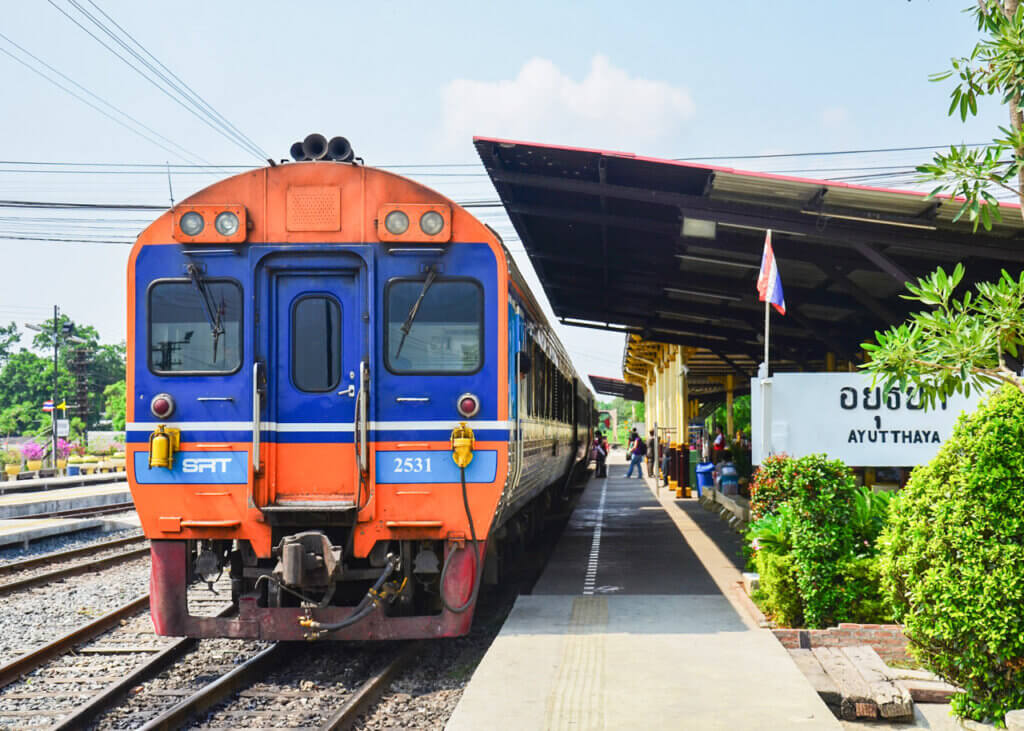
Thailand's State Railway runs more than a dozen daily services between Bangkok and Ayutthaya, making the ancient capital one of the country's most accessible UNESCO sites by rail. The journey takes between 70 and 90 minutes depending on the service, and trains deposit you within two kilometers of the historical park's main temple cluster. This guide covers train schedules, station navigation, and onward transport to the ruins.
Quick answer
Trains depart Bangkok's Krung Thep Aphiwat Central Terminal (formerly Bang Sue Grand Station) and Hua Lamphong for Ayutthaya every one to two hours from 04:20 to 22:30 daily, with the journey averaging 80 minutes. Third-class tickets cost 15-20 THB and can be purchased at the station on the day of travel. From Ayutthaya railway station, tuk-tuks charge 200-300 THB for a full-day temple circuit, or rent a bicycle at the station for 50 THB per day to explore the historical park independently.
The State Railway of Thailand operates the only direct rail link between Bangkok and Ayutthaya, a route that has connected the two cities since 1897 when King Chulalongkorn inaugurated the northern line. Today's trains range from aging third-class carriages with open windows and wooden benches to air-conditioned second-class coaches, though most travelers on an ayutthaya day trip from bangkok train opt for the cheaper unreserved seating to maximize flexibility. Departures from Bangkok split between two terminals: Krung Thep Aphiwat Central Terminal in Bang Sue, the capital's main long-distance hub, and the older Hua Lamphong station near Chinatown. Both stations list Ayutthaya-bound services on digital departure boards, though confirmation with platform staff is advisable since some northern-line trains skip the stop during peak hours. The journey north crosses the Chao Phraya River delta, passing rice paddies and provincial towns before arriving at Ayutthaya's single-platform station on the east bank of the Pasak River. Ayutthaya railway station sits roughly 1.8 kilometers from Wat Mahathat and the historical park's central zone, a distance that shapes the logistics of a rail-based visit. The station concourse has a small tourist information counter, bicycle rental kiosks, and a row of tuk-tuk drivers who negotiate temple tours. Most visitors either hire a tuk-tuk for a half-day circuit of Wat Phra Si Sanphet, Wat Chaiwatthanaram, and Wat Ratchaburana, or rent a bicycle to cover the flat terrain at their own pace. The historical park's temples open at 08:00, meaning early trains—departing Bangkok between 06:00 and 07:30—allow arrivals during the best light and before tour buses from the capital. Return trains to Bangkok run until late evening, with the last service typically departing Ayutthaya around 21:00. Since third-class tickets are unreserved, boarding is first-come seating, and afternoon trains can fill quickly on weekends. The railway timetable shifts seasonally, so confirm departure times at the station or via the State Railway's online schedule the morning of travel. Unlike organized tours, the train requires managing your own temple entry fees (300 THB for the multi-site pass) and arranging local transport, but the low cost and schedule flexibility make an ayutthaya day trip from bangkok train a practical choice for budget-conscious travelers comfortable with independent navigation.
“The railway has connected Bangkok and Ayutthaya since 1897, when King Chulalongkorn inaugurated Thailand's northern line.”
The rail journey to Ayutthaya begins at Bangkok's primary transit hubs, providing a direct route to the historic city. Trains depart frequently, offering a straightforward transit link for travelers visiting the Ayutthaya Historical Park.
Krung Thep Aphiwat Central Terminal to Ayutthaya Station
Hua Lamphong Station to Ayutthaya Station
Ayutthaya Station to Historical Park
Local ferry crossing to Historical Park area
Upon arriving at Ayutthaya Station, cross the river via the local passenger ferry for direct access to the main temple district. Once across, bicycles or local tuk-tuks are available to reach the park entrance.
The best arrival window is 08:00–10:30 to avoid peak afternoon heat and large tour groups arriving from Bangkok. Syncing your train departure to reach Ayutthaya shortly after the morning opening ensures a more manageable experience.
Cooler, 20°C–30°C. Peak season with comfortable walking temperatures.
Hot and dry, 30°C–40°C. Extreme heat requires early morning completion.
Humid with rain, 25°C–33°C. Frequent afternoon showers may impact movement.
—;Weekdays provide a quieter park experience before weekend crowds arrive.
Verdict: Aim for a weekday arrival between 08:00–10:30 during the cooler months of November to February.
This plan suits travelers arriving on the morning train from Bangkok, maximizing temple coverage before an afternoon return. The circuit takes approximately 5–6 hours, including transport from the station and a lunch stop.
Hire a tuk-tuk or rent a bicycle near the station—negotiate a half-day rate or fixed-loop fare to cover the main temple circuit efficiently.
Start at Wat Mahathat to see the iconic Buddha head entwined in tree roots; arrive early to avoid mid-morning tour-bus crowds and secure clear photos.
Move to the former royal temple with its three restored chedis; allocate 45 minutes to walk the grounds and photograph the whitewashed stupas in morning light.
Head west to this Khmer-style monastery along the river; the prang towers and surrounding chedi make for striking compositions, especially before noon heat peaks.
Pause at a riverside café or local market stall; simple noodle or curry dishes cost 60–100 THB and provide a shaded rest before the afternoon leg.
Climb the steep central prang for a rooftop view of the park—grippy shoes help on the narrow steps; budget 30 minutes including the descent.
Head back to Ayutthaya Station in time for mid-afternoon train departures; confirm your return ticket and boarding platform upon arrival.
Admission fees for Ayutthaya Historical Park are structured based on whether you visit an individual temple site or wish to explore multiple locations throughout the park.
Verdict: A typical adult pays 80 THB for a single site, though the 300 THB multi-site pass is the primary option that changes total costs for full-day visitors.
Ayutthaya Historical Park operates on a consistent schedule throughout the week, providing predictable access for travelers arriving by train. The site is open daily to accommodate visitors planning their day trips from Bangkok.
Rail travel to Ayutthaya requires specific logistics preparation that differs from joining a guided tour.
Everything you need to know about ayutthaya day trip from bangkok train
Traveling by rail offers a scenic and cost-effective way to reach the former capital. This approach allows travelers to avoid road traffic and experience a more authentic pace of transit. The journey provides easy access to the central ruins, making it a popular choice for independent explorers. Visiting these ancient landmarks via the national rail network is highly recommended for those seeking a logistics-driven adventure.
Entrance fees for the park start at 80 THB for a single major temple site. Visitors planning to see multiple locations can purchase a comprehensive pass for 300 THB. Please ensure you have local currency available as smaller sites may require cash payments. Entry fees remain consistent for all visitors throughout the year.
The best arrival window is between 08:00 and 10:30 to avoid peak heat and large crowds. Arriving early allows you to explore the central sites before the midday sun intensifies. Planning your arrival during this period also helps you stay ahead of organized tour groups. This schedule maximizes your time at the UNESCO heritage sites before the afternoon climate becomes challenging.
The historical park is open daily from 08:00 to 18:00. This schedule remains consistent from Monday through Sunday, ensuring flexibility for your visit. You can plan your excursion for any day of the week knowing these operational hours apply. Please check the current train schedule to ensure your arrival aligns with these opening times.
When visiting these ancient monuments, it is essential to carry items for sun protection like a hat, sunglasses, and high-SPF sunscreen. Wearing modest clothing that covers your shoulders and knees is required at all sacred religious sites. Bringing a refillable water bottle is advised to maintain hydration throughout your exploration. Comfortable walking shoes are also a necessity for navigating the extensive temple grounds.
Yes, the historical park features many distinct temple sites that you can explore in a single day. While the standard fee covers one site, the multi-site pass allows for a more comprehensive experience across the former capital. You can easily plan your own itinerary to move between these ruins using local transport options like bicycles or tuk-tuks. This flexibility is a major advantage of organizing your own rail transit instead of joining a rigid group tour.